
Sediment pollution in the Spokane River and its Tributaries: What is it and what are we doing about it?
If you have ever come across brown, opaque river water, chances are that nonpoint source pollution is to blame. This issue continues to be a concern along the Spokane River and its tributaries – particularly the Little Spokane River and the Hangman Creek watershed. So, what exactly is causing it?
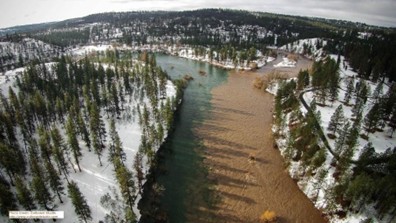
Sediment pollution starts small, often from agricultural sources. Streams and creeks that have been polluted by livestock contamination, harmful chemicals, and insufficient agricultural buffer zones run into larger tributaries like Hangman Creek and the Little Spokane River. These tributaries carry water into the Spokane River, resulting in significant pollution. The aerial photo below, which is nearly iconic now among our vast community of conservation experts working on this issue, shows a visual of sediment pollution at the meeting of Hangman Creek and the Spokane River:
On June 23rd, the Spokane River Dissolved Oxygen (DO) and Total Maximum Daily Load (TMDL) advisory committee held their second quarter meeting to address matters related to sediment pollution. Each quarter, the committee brings together experts from private and public sector organizations who share their knowledge on nonpoint source pollution in the region, and the innovative work that they do to address and prevent it. The committee then provides feedback to the Washington State Department of Ecology on the implementation of DO TMDL guidelines.
Walt Edelen, Mitch Redfern, and Curtis Johnson presented at this quarterly meeting. Edelen has been the Water Resources Department Manager at the Spokane Conservation District great partner of the Forum’s, for 26 years. He has been working on stream bank stabilization and riparian restoration projects throughout the Hangman Creek watershed (click here for an example), and he shared updates on his work at the meeting.
Redfern and Johnson work as Ecology’s leads on watershed implementation in Hangman Creek and the Little Spokane River, respectively. Following up from our April conference, Redfern shared his work on the implementation of the Hangman Settlement Agreement while Johnson shared similar work that he is doing along the Little Spokane River.
The Forum would also like to highlight the excellent work being done by our partners at Spokane Riverkeeper and Trout Unlimited to raise community awareness of this issue, lead research and cleanup efforts, and offer ways for the public to volunteer and get involved. Keep following the Forum to stay informed about different ways our community is working together for a healthy river system.